AVAILABLE NOW
Published March 1, 2023
Wayne State University Press

AVAILABLE NOW
Published February 17, 2026
Wayne State University Press
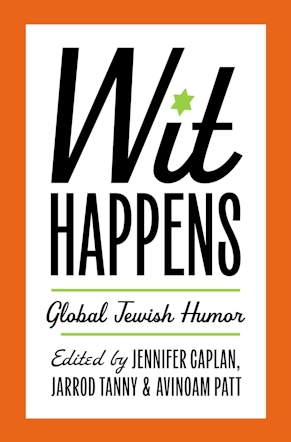
A collection that proves Jewish humor knows no geographic bounds.
Searching for some well-traveled humor? Look no further than this innovative collection, which investigates Jewish humor in television, film, comedy performance, and literature spanning Canada, the US, Europe, North Africa, the Middle East, and Asia. This wide-ranging compilation of Jewish "humors"—from the fallout of a Holocaust joke told in Japan, to Mel Brooks's invocation of longstanding Jewish satirization in Blazing Saddles, to reevaluations of Jewish comedic themes from Kafka and Seinfeld—highlights the transnationality of Jewish identity and humor while emphasizing how Jewish culture shifts in unexpected ways across time and place. The contributions illustrate the value of studying Jewish humor that decenters the US and Ashkenazi-centered analysis, broadening considerations of the possibilities within Jewish cultural production through humor as it transforms globally.
In this comprehensive approach to Jewish humor focused on the relationship between humor and American Jewish practice, Jennifer Caplan calls us to adopt a more expansive view of what it means to "do Jewish," revealing that American Jews have, and continue to, turn to humor as a cultural touchstone. Caplan frames the book around four generations of Jewish Americans from the Silent Generation to Millennials, highlighting a shift from the utilization of Jewish-specific markers to American-specific markers.

The Past, Lived and Imagined: Nostalgia in Jewish Women’s Comics

Public Heroes, Secret Jews:
Jewish Identity and Comic Books

Esther Friesner’s Serious, Funny, and Seriously Funny Speculative Fiction
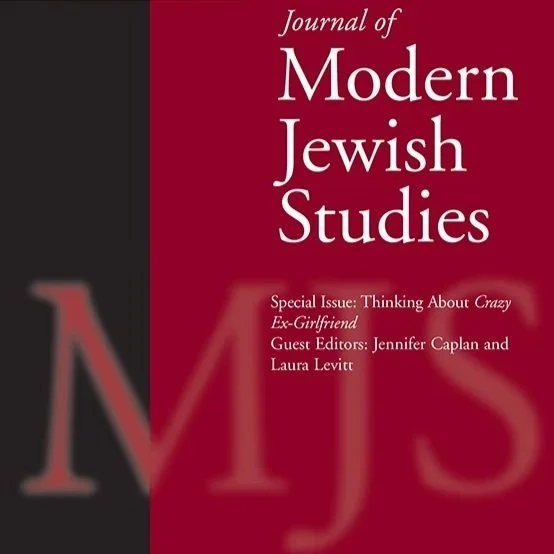
Rachel Bloom’s gaping MAAW: Jewish women, stereotypes, and the boundary bending of Crazy Ex-Girlfriend

American Jewish Humor
Praise for
“Funny, You Don’t Look Funny”
Jarrod Tanny, author, City of Rogues and Schnorrers: Russia’s Jews and the Myth of Old Odessa
“Unlike most books on Jewish humor, Caplan’s innovative work explores the place of Judaism within humor itself, allowing Caplan to stay laser-focused on her topic. The reader will be enlightened and entertained as she tracks the evolution of this poorly understood facet of American comedy across four generations.”
Simon J. Bronner, author, Jewish Cultural Studies (Wayne State University Press, 2021)
a National Jewish Book Award winner
“You have undoubtedly heard that Jews are funny and, after all, so many iconic Jewish comedian writers are famous for their biting humor, right? Rather than take that sweeping assertion for granted, Jennifer Caplan writes insightfully about the story behind their stories through several generations of literary and film humor by iconic Jews who ‘made it’ in America. Her profound revelation is that humor as an intellectual and social frame for paradox offers a critical expression of generational difference in views of the role of Judaism in American culture. Her book is a provocative cultural history and at the same time a clarion call for future generations of a people connected to the joke as well as the book.”
Rachel Kranson, author,
Ambivalent Embrace:
Jewish Upward Mobility in Postwar America
“Funny, You Don’t Look Funny is a terrific volume, anchored by Jennifer Caplan’s sharp, innovative readings of American Jewish comedic work from the late twentieth century through the turn of the millennium. Training her lens on how these comics took on the Jewish religion, Caplan reveals that the comedic process has long been a vital form of religious interpretation for American Jews.”
Publishers Weekly
“This perceptive debut from Caplan, a Judaic studies professor at the University of Cincinnati, examines how “Jewish satire and American Judaism have interacted over the last half century.” Unpacking the works of Woody Allen, Rachel Bloom, and Nathan Englander, among others, Caplan argues that some Jewish authors of the Silent Generation, exemplified by Joseph Heller, displayed in their fiction an irreverence toward the faith while figures such as Bernard Malamud and Philip Roth demonstrated concern with Jewish people’s ambivalence about their heritage. Baby boomers, Caplan contends, served as a bridge between these sensibilities and those of Generation X, who tend to be skeptical of Jewish identity, as illustrated by Larry David’s depictions of the faithful as “liars and hypocrites” on his TV show Curb Your Enthusiasm. The discussion of millennial Jewish humor is more disjointed and offers fewer takeaways, among them the observation that younger Jewish people “are moving away from Israel and the Holocaust as the touchstones” of Judaism. The wide-ranging analysis skillfully synthesizes cultural themes from novels, films, and tweets, while the insightful takes illuminate what it means to be Jewish in America. The result is a discerning perspective on the recent evolution of American Jewish identity.“
Seen, Unseen, and Obscene: Historical Violence in Comic Books
Praise for
Wit Happens: Global Jewish Humor
Nathan Abrams, professor in film, Bangor University, Wales
“Wit Happens is the most comprehensive scholarly book on Jewish humor to date, moving beyond what the editors call the 'Ashkenazi bubble' that focuses on humor from Eastern Europe, North America, and occasionally Israel to explore and highlight the complexity and transnationality of Jewish identity within a global context. This collection is a welcome contribution to the field, engaging with scholarship and recent literature but pushing it forward.”
Victoria Aarons, editor of The Story's Not Over
“Wit Happens is a fascinating and timely study of the complexities and brilliance of Jewish humor globally. In essays that cover a geographical and temporal range of genres and approaches, the editors have compiled varied 'takes' on Jewish humor, demonstrating the deeply ironic structures and patterns that bring dramatic life to the rich diversity of Jewish thought.”
Publishers Weekly
“Jennifer Caplan, Jarrod Tanny, and Avinoam Patt— scholars of Judaic studies, history, and Holocaust studies, respectively—curate a collection of ways Jewish humor is a defining cultural touchstone in America and beyond.“